Domain gasblitz.de kaufen?
Wir ziehen mit dem Projekt
gasblitz.de um.
Sind Sie am Kauf der Domain
gasblitz.de interessiert?
domain@kv-gmbh.de · 0541-91531010
Domain gasblitz.de kaufen?
Kann ich Erdgas und Autogas tanken?
Kann ich Erdgas und Autogas tanken? Ja, beide Kraftstoffe sind für den Betrieb von Fahrzeugen geeignet, jedoch handelt es sich um unterschiedliche Treibstoffe. Erdgas wird als CNG (Compressed Natural Gas) bezeichnet und Autogas als LPG (Liquefied Petroleum Gas). Es ist wichtig zu beachten, dass nicht alle Fahrzeuge für den Betrieb mit beiden Kraftstoffen geeignet sind. Es ist ratsam, sich vor dem Tanken zu informieren, ob das Fahrzeug für den jeweiligen Kraftstoff zugelassen ist. Zudem können nicht alle Tankstellen sowohl Erdgas als auch Autogas anbieten, daher ist es ratsam, im Voraus zu prüfen, welche Kraftstoffe an der gewünschten Tankstelle verfügbar sind. **
Wie funktioniert eine Zapfsäule und welche Arten von Kraftstoff kann man an einer Zapfsäule tanken?
Eine Zapfsäule ist mit einem Tank verbunden, der Kraftstoff enthält. Durch einen Schlauch und eine Düse wird der Kraftstoff in das Fahrzeug geleitet. An einer Zapfsäule kann man Benzin, Diesel, Super, Super E10, AdBlue und manchmal auch Erdgas tanken. **


Ähnliche Suchbegriffe für Allpedal-Macrodose-Envelope-Filter
Top-Angebote
Produkte zum Begriff Allpedal-Macrodose-Envelope-Filter:
-
Modtone Effects - MT-FF Funk Filter - Envelope FilterModtone Effects - MT-FF Funk Filter XXL-Ansicht Modtone ist eine amerikanische Marke kleiner Auswahl fantastischer Effekte zu einem sehr guten Preis-Leistungs-Verhältnis herstellt. Mit vielen verschiedenen Serien und Produkten ist die Modtone Produktlinie phänomenal: schlichtweg alle Effekte, vom Wah über Oktaver bis hin zum chromatischen Tuner oder der multiplen Stromversorgung. All diese Effektpedale haben ein solides superkompaktes Metallgehäuse (MXR Typ) und liefern ein transparentes und cleanes Signal. Der ModTone MT- FF Funk -Filter ist ein echtes Bypass Boutique Pedal, es erzeugt vintage envelope oder Auto- Wah -Effekte . Die vielfältigen Einstellmöglichkeiten garantieren eine breite Palette an spannenden Tönen , die großartige Sounds im Bereich der sauberen oder verzerrten Signale liefern . Die Funk -Filter Reaktion kann auch durch einfaches Zurückdrehen des Lautstärkereglers an der Gitarre gesteuert werden. Features: variabler Klang Envelope bzw. Auto wah Effekte High Pass, Mid Pass, Low Pass Drehregler Drive Control F-Factor Control true Bypass The ModTone MT-FF Funk Filter is a true bypass boutique style pedal that recreates vintage envelope or auto-wah type effects. High pass, Mid Pass and Low Pass settings can be used in conjunction with the F-Factor control and Drive settings to deliver a wide range of exciting tones that work great on clean or distorted signals. The Funk Filter’s reaction can also be changed by simply backing off your guitar’s volume knob to find the “sweet spot” and can also change depending if bridge or neck pickups are selected.92,00 €*Versand: 0,00 €Sichere Weiterleitung zum Anbieter
-
Behringer B-Tron III Envelope FilterBehringer B-Tron III Envelope Filter; Effektpedal für E-Gitarre & Bass; Nachbau eines berühmten Vintage-Auto-Wah Envelope Filter Pedals; komplett analoger optischer Schaltkreis; 3 Filtertypen: Tief-, Band- und Hochpass; Up/Down-Modi; Empfindlichkeitsregler für verschiedene Audioquellen; Regler: Mode, Peak, Gain; Schalter: Range, Drive, Power; LED: Effekt An; Fußschalter: Effekt Bypass; Anschlüsse: Eingang (6,3mm Klinke), Ausgang (6,3mm Klinke); Netzadapter Anschluss: Hohlstecker Buchse 5,5 x 2,1 mm, Minuspol Innen; Stromversorgung mit einer 9 V Batterie oder einem 9 V DC Netzadapter (nicht im Lieferumfang enthalten); passendes optionales Netzteil: Art. Nr. #409939; True Bypass55,00 €*Versand: 0,00 €Sichere Weiterleitung zum Anbieter
-
Dunlop M-82 Bass Envelope FilterMXR M-82 Bass Envelope Filter Der MXR M-82 Bass Envelope Filter besticht durch seinen Klang und die allseits bekannte MXR Qualität. MXR M-82 Bass Envelope Filter: Bass Effekt Analoger Envelope Filter True Bypass Regler: Dry, FX, Decay, Q und Sens Stromversorgung: 9 Volt Batterie oder Netzteil (optional) The MXR M82 is an analog envelope filter designed to preserve the instrument’s natural character while adding a wah effect to the signal. It boasts a sparkle-purple finish, five knobs, and a true-bypass footswitch. Overall, this pedal feels quite sturdy, and it’s a bit smaller than most stompboxes. The M82 is powered by a 9-volt battery or an optional power supply. Accessing the battery requires removing the bottom plate, which is less convenient than a pop-out battery box. Removing this plate, I found a bright red circuit board filling most of the box, with just enough room to house the 9-volt cell. The pedal’s five knobs are grouped into two rows. On the top row, the FX knob controls the level of effect, while the Dry knob sets the level of the unprocessed original signal. This is really important for bass, because as the filter sweeps upward, the note’s bottom end drops away. The Dry knob lets you keep the lows by blending in straight bass tone. The three knobs on the lower row— Decay, Q, and Sensitivity—shape the effect itself. Decay sets the floor frequency for the wah effect. When a filter sweeps upward on a note’s attack, it then heads back down to where it started. As you turn Decay clockwise, the less downward sweep you hear. Conversely, lower Decay settings cause deeper filter plunges. Below noon, a note sweeps quite low before the filter releases. The M82’s manual explains that the Q control adjusts the “intensity” of the effect, but the control actually seems to influence the width of the frequency sweep. At lower Q settings, the filter sweeps a narrower band of frequencies. At higher Q settings, the filter covers a wider range. The final control is Sensitivity. This knob is key to achieving adequate quack. Essentially, Sensitivity influences how easily your note attack sweeps the filter. Raising the sensitivity lets you trigger the wah effect with a lighter attack. But if you play hard or your bass has hot pickups, setting the sensitivity too high can leave all your notes at the high end of the filter’s sweep. High Sensitivity settings also tend to emphasize string noise more than I’d like. Twirling the Knobs The M82’s instruction pamphlet offers three sample settings, and I immediately went for “Bubble Funk,” which is described as “classic ’70s funk.” It’s that burpy, quacky sound that makes you want to put on a paisley polyester shirt with a big collar, turn on a strobe light, and have a blast boogying! The best part is that the M82 accomplishes that funk sound in a way that sounds natural instead of overprocessed. I liked the initial sound, but I liked it even more when I brought up the Decay a bit so it didn’t sweep quite so low and backed off the Sensitivity so it didn’t feel too compressed. The other two sample settings—“Bottom Dweller,” which served up mainly the note’s fundamental, and “Gorilla Biscuit,” which seemed a little too thin to hold up a bass line— didn’t quite do it for me, but it I found that subtle tweaking of both yielded usable results with a lot of potential. Setting the M82’s controls is like most envelope filters I’ve played. It takes careful experimenting to get the sound you’re after, and it’s easy to miss and brew up an unwanted sound. Because envelope filters are touch sensitive and their response varies by the strength of the instrument’s output, adjusting the pedal is not a one-size- fits-all proposition. But that’s the trade-off for analog envelope filters in general. Digital envelope filters typically have an easier setup, but the resulting sound usually isn’t quite as satisfying as with analog units like the M82.195,00 €*Versand: 0,00 €Sichere Weiterleitung zum Anbieter
-
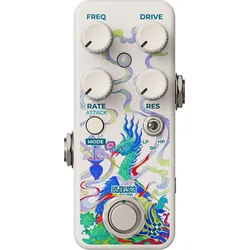
Klowra Hane AutoWah/Envelope Filter PedalHochsensibler Envelope-Follower für dynamische Wahs, Drei Modi: Envelope, LFO und kombinierte Modulation, Low-, Band- und High-Pass für flexible Filter-Sounds, Tap Tempo synchronisiert rhythmische Filterbewegungen, FREQ, RES, DRIVE und RATE für präzises Sounddesign, True/Buffered Bypass, externe Steuerung und USB-C,99,00 €*Versand: 0,00 €Sichere Weiterleitung zum Anbieter


-
Wie funktioniert eine Zapfsäule und welche Arten von Kraftstoff kann man an einer herkömmlichen Zapfsäule tanken?
Eine Zapfsäule besteht aus einem Tank, einer Pumpe, einem Zahlungsterminal und einem Schlauch mit Zapfpistole. Der Kraftstoff wird aus dem Tank in das Fahrzeug gepumpt, während der Kunde den Betrag am Terminal bezahlt. An einer herkömmlichen Zapfsäule kann man Benzin, Diesel und in einigen Fällen auch Autogas tanken. **
-
Ab welchem Alter darf man Kraftstoff an der Tankstelle tanken?
In den meisten Ländern liegt das Mindestalter für das Tanken von Kraftstoff an einer Tankstelle bei 16 Jahren. Es kann jedoch je nach Land und Gesetzgebung variieren. Es ist wichtig, dass Jugendliche beim Tanken von Kraftstoff immer von einem Erwachsenen begleitet werden. **
-
Wie funktioniert eine Zapfsäule und welches Zubehör wird benötigt, um Kraftstoff zu tanken?
Eine Zapfsäule ist mit einem Tank und einer Pumpe ausgestattet, die Kraftstoff aus dem Tank in das Fahrzeug befördert. Um Kraftstoff zu tanken, benötigt man eine Zapfpistole, die in den Tankstutzen des Fahrzeugs eingeführt wird. Zudem wird eine Tankkarte oder Bargeld benötigt, um die Zapfsäule zu aktivieren und den Kraftstoff zu bezahlen. **
-
Wie funktioniert eine Zapfsäule und welche verschiedenen Kraftstoffe kann man an einer Tankstelle tanken?
Eine Zapfsäule besteht aus einem Tank, einer Pumpe und einem Zahlungsterminal. Der Kraftstoff wird durch die Pumpe aus dem Tank in das Fahrzeug geleitet. An einer Tankstelle kann man Benzin, Diesel, Super, Super E10, AdBlue, Autogas und Wasserstoff tanken. **

Wie funktioniert eine Zapfsäule und welche verschiedenen Treibstoffe kann man an einer Tankstelle tanken?
Eine Zapfsäule misst die Menge des getankten Treibstoffs und berechnet den Preis. Der Tankvorgang wird durch die Auswahl des gewünschten Treibstoffs und das Einführen der Zapfpistole gestartet. An einer Tankstelle kann man Benzin, Diesel, Super, Super E10, AdBlue und in einigen Fällen auch Erdgas oder Strom tanken. **
Was ist umweltfreundlicher Autogas oder Erdgas?
Was ist umweltfreundlicher Autogas oder Erdgas? Autogas, auch bekannt als Flüssiggas, hat den Vorteil, dass es im Vergleich zu Erdgas eine höhere Energiedichte aufweist, was bedeutet, dass weniger Treibstoff benötigt wird, um die gleiche Strecke zurückzulegen. Zudem ist Autogas in der Regel günstiger und verursacht weniger CO2-Emissionen. Erdgas hingegen gilt als sauberer Brennstoff, da es weniger Schadstoffe wie Stickoxide und Feinstaub produziert. Letztendlich hängt die Umweltfreundlichkeit von verschiedenen Faktoren ab, wie der Herkunft des Gases und der Effizienz des Motors. **
Top-Angebote
Produkte zum Begriff Allpedal-Macrodose-Envelope-Filter:
-
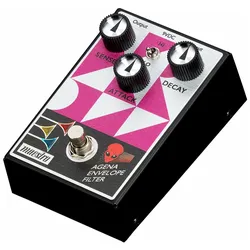
Allpedal Macrodose Envelope FilterAllpedal Macrodose Envelope Filter; Effektpedal für E-Gitarre & Bass; Analoges Filter mit digitaler Steuerung, Blend und Volume; Autowah mit wählbaren Wellenformen, Sample/Hold-Funktionen, Step-Filter, Random Sample/Hold und sogar einer pixeligen Filterfunktion; funktioniert mit vielen Instrumenten, einschließlich E-Gitarre, Synthesizer und Bass; Regler: Vol, Blend, Depth, Res, Freq, Warp; Schalter: Shape & Mode Rotary Switch; LED: Distortion An, Delay An; Fußschalter: Distortion Bypass, Delay Bypass; Anschlüsse: Input (6,3 mm Klinke), Output (6,3 mm Klinke), Exp. Pedal In (6,3 mm Stereoklinke); Netzadapter Anschluss: Hohlstecker Buchse 5,5 x 2,1 mm, Minuspol Innen; Stromaufnahme: 60 mA; Stromversorgung mit einem 9 V DC Netzadapter (nicht im Lieferumfang enthalten); passendes optionales Netzteil: Art. Nr. #409939; Abmessungen (B x T x H): 119 x 89 x 60 mm; Gewicht: 430 g; Made in USA; Hinweis: Batteriebetrieb wird nicht unterstützt319,00 €*Versand: 0,00 €Sichere Weiterleitung zum Anbieter
-
Digitech DOD Envelope Filter 440Digitech DOD Envelope Filter 440; Band Pass Filter Pedal, Voice Schalter, Wiederauflage des legendären DOD Pedals, Verbesserte Schaltung & Komponenten, True Bypass Schaltung, Leichtes Aluminium Gehäuse, Aktualisierter 9V DC Netzteil Anschluss, Lieferung ohne Netzteil (passendes Netzteil 409939)109,00 €*Versand: 0,00 €Sichere Weiterleitung zum Anbieter
-
Modtone Effects - MT-FF Funk Filter - Envelope FilterModtone Effects - MT-FF Funk Filter XXL-Ansicht Modtone ist eine amerikanische Marke kleiner Auswahl fantastischer Effekte zu einem sehr guten Preis-Leistungs-Verhältnis herstellt. Mit vielen verschiedenen Serien und Produkten ist die Modtone Produktlinie phänomenal: schlichtweg alle Effekte, vom Wah über Oktaver bis hin zum chromatischen Tuner oder der multiplen Stromversorgung. All diese Effektpedale haben ein solides superkompaktes Metallgehäuse (MXR Typ) und liefern ein transparentes und cleanes Signal. Der ModTone MT- FF Funk -Filter ist ein echtes Bypass Boutique Pedal, es erzeugt vintage envelope oder Auto- Wah -Effekte . Die vielfältigen Einstellmöglichkeiten garantieren eine breite Palette an spannenden Tönen , die großartige Sounds im Bereich der sauberen oder verzerrten Signale liefern . Die Funk -Filter Reaktion kann auch durch einfaches Zurückdrehen des Lautstärkereglers an der Gitarre gesteuert werden. Features: variabler Klang Envelope bzw. Auto wah Effekte High Pass, Mid Pass, Low Pass Drehregler Drive Control F-Factor Control true Bypass The ModTone MT-FF Funk Filter is a true bypass boutique style pedal that recreates vintage envelope or auto-wah type effects. High pass, Mid Pass and Low Pass settings can be used in conjunction with the F-Factor control and Drive settings to deliver a wide range of exciting tones that work great on clean or distorted signals. The Funk Filter’s reaction can also be changed by simply backing off your guitar’s volume knob to find the “sweet spot” and can also change depending if bridge or neck pickups are selected.92,00 €*Versand: 0,00 €Sichere Weiterleitung zum Anbieter
-
Behringer B-Tron III Envelope FilterBehringer B-Tron III Envelope Filter; Effektpedal für E-Gitarre & Bass; Nachbau eines berühmten Vintage-Auto-Wah Envelope Filter Pedals; komplett analoger optischer Schaltkreis; 3 Filtertypen: Tief-, Band- und Hochpass; Up/Down-Modi; Empfindlichkeitsregler für verschiedene Audioquellen; Regler: Mode, Peak, Gain; Schalter: Range, Drive, Power; LED: Effekt An; Fußschalter: Effekt Bypass; Anschlüsse: Eingang (6,3mm Klinke), Ausgang (6,3mm Klinke); Netzadapter Anschluss: Hohlstecker Buchse 5,5 x 2,1 mm, Minuspol Innen; Stromversorgung mit einer 9 V Batterie oder einem 9 V DC Netzadapter (nicht im Lieferumfang enthalten); passendes optionales Netzteil: Art. Nr. #409939; True Bypass55,00 €*Versand: 0,00 €Sichere Weiterleitung zum Anbieter
-
Kann ich Erdgas und Autogas tanken?
Kann ich Erdgas und Autogas tanken? Ja, beide Kraftstoffe sind für den Betrieb von Fahrzeugen geeignet, jedoch handelt es sich um unterschiedliche Treibstoffe. Erdgas wird als CNG (Compressed Natural Gas) bezeichnet und Autogas als LPG (Liquefied Petroleum Gas). Es ist wichtig zu beachten, dass nicht alle Fahrzeuge für den Betrieb mit beiden Kraftstoffen geeignet sind. Es ist ratsam, sich vor dem Tanken zu informieren, ob das Fahrzeug für den jeweiligen Kraftstoff zugelassen ist. Zudem können nicht alle Tankstellen sowohl Erdgas als auch Autogas anbieten, daher ist es ratsam, im Voraus zu prüfen, welche Kraftstoffe an der gewünschten Tankstelle verfügbar sind. **
-
Wie funktioniert eine Zapfsäule und welche Arten von Kraftstoff kann man an einer Zapfsäule tanken?
Eine Zapfsäule ist mit einem Tank verbunden, der Kraftstoff enthält. Durch einen Schlauch und eine Düse wird der Kraftstoff in das Fahrzeug geleitet. An einer Zapfsäule kann man Benzin, Diesel, Super, Super E10, AdBlue und manchmal auch Erdgas tanken. **
-
Wie funktioniert eine Zapfsäule und welche Arten von Kraftstoff kann man an einer herkömmlichen Zapfsäule tanken?
Eine Zapfsäule besteht aus einem Tank, einer Pumpe, einem Zahlungsterminal und einem Schlauch mit Zapfpistole. Der Kraftstoff wird aus dem Tank in das Fahrzeug gepumpt, während der Kunde den Betrag am Terminal bezahlt. An einer herkömmlichen Zapfsäule kann man Benzin, Diesel und in einigen Fällen auch Autogas tanken. **
-
Ab welchem Alter darf man Kraftstoff an der Tankstelle tanken?
In den meisten Ländern liegt das Mindestalter für das Tanken von Kraftstoff an einer Tankstelle bei 16 Jahren. Es kann jedoch je nach Land und Gesetzgebung variieren. Es ist wichtig, dass Jugendliche beim Tanken von Kraftstoff immer von einem Erwachsenen begleitet werden. **
Ähnliche Suchbegriffe für Allpedal-Macrodose-Envelope-Filter
-
Dunlop M-82 Bass Envelope FilterMXR M-82 Bass Envelope Filter Der MXR M-82 Bass Envelope Filter besticht durch seinen Klang und die allseits bekannte MXR Qualität. MXR M-82 Bass Envelope Filter: Bass Effekt Analoger Envelope Filter True Bypass Regler: Dry, FX, Decay, Q und Sens Stromversorgung: 9 Volt Batterie oder Netzteil (optional) The MXR M82 is an analog envelope filter designed to preserve the instrument’s natural character while adding a wah effect to the signal. It boasts a sparkle-purple finish, five knobs, and a true-bypass footswitch. Overall, this pedal feels quite sturdy, and it’s a bit smaller than most stompboxes. The M82 is powered by a 9-volt battery or an optional power supply. Accessing the battery requires removing the bottom plate, which is less convenient than a pop-out battery box. Removing this plate, I found a bright red circuit board filling most of the box, with just enough room to house the 9-volt cell. The pedal’s five knobs are grouped into two rows. On the top row, the FX knob controls the level of effect, while the Dry knob sets the level of the unprocessed original signal. This is really important for bass, because as the filter sweeps upward, the note’s bottom end drops away. The Dry knob lets you keep the lows by blending in straight bass tone. The three knobs on the lower row— Decay, Q, and Sensitivity—shape the effect itself. Decay sets the floor frequency for the wah effect. When a filter sweeps upward on a note’s attack, it then heads back down to where it started. As you turn Decay clockwise, the less downward sweep you hear. Conversely, lower Decay settings cause deeper filter plunges. Below noon, a note sweeps quite low before the filter releases. The M82’s manual explains that the Q control adjusts the “intensity” of the effect, but the control actually seems to influence the width of the frequency sweep. At lower Q settings, the filter sweeps a narrower band of frequencies. At higher Q settings, the filter covers a wider range. The final control is Sensitivity. This knob is key to achieving adequate quack. Essentially, Sensitivity influences how easily your note attack sweeps the filter. Raising the sensitivity lets you trigger the wah effect with a lighter attack. But if you play hard or your bass has hot pickups, setting the sensitivity too high can leave all your notes at the high end of the filter’s sweep. High Sensitivity settings also tend to emphasize string noise more than I’d like. Twirling the Knobs The M82’s instruction pamphlet offers three sample settings, and I immediately went for “Bubble Funk,” which is described as “classic ’70s funk.” It’s that burpy, quacky sound that makes you want to put on a paisley polyester shirt with a big collar, turn on a strobe light, and have a blast boogying! The best part is that the M82 accomplishes that funk sound in a way that sounds natural instead of overprocessed. I liked the initial sound, but I liked it even more when I brought up the Decay a bit so it didn’t sweep quite so low and backed off the Sensitivity so it didn’t feel too compressed. The other two sample settings—“Bottom Dweller,” which served up mainly the note’s fundamental, and “Gorilla Biscuit,” which seemed a little too thin to hold up a bass line— didn’t quite do it for me, but it I found that subtle tweaking of both yielded usable results with a lot of potential. Setting the M82’s controls is like most envelope filters I’ve played. It takes careful experimenting to get the sound you’re after, and it’s easy to miss and brew up an unwanted sound. Because envelope filters are touch sensitive and their response varies by the strength of the instrument’s output, adjusting the pedal is not a one-size- fits-all proposition. But that’s the trade-off for analog envelope filters in general. Digital envelope filters typically have an easier setup, but the resulting sound usually isn’t quite as satisfying as with analog units like the M82.195,00 €*Versand: 0,00 €Sichere Weiterleitung zum Anbieter
-
Klowra Hane AutoWah/Envelope Filter PedalHochsensibler Envelope-Follower für dynamische Wahs, Drei Modi: Envelope, LFO und kombinierte Modulation, Low-, Band- und High-Pass für flexible Filter-Sounds, Tap Tempo synchronisiert rhythmische Filterbewegungen, FREQ, RES, DRIVE und RATE für präzises Sounddesign, True/Buffered Bypass, externe Steuerung und USB-C,99,00 €*Versand: 0,00 €Sichere Weiterleitung zum Anbieter
-
Electro Harmonix Q-Tron Plus Envelope FilterElectro Harmonix Q-Tron Plus Envelope Filter; Effektpedal für E-Gitarre & Bass; Wie der Q-Tron, aber mit Effekt-Loop und Attack-Response-Schalter; wählbare Tiefpass-, Bandpass- und Hochpass-Filter; Resonant Peak regelt die Güte des Filters; umschaltbare Hoch- und Tieffrequenz-Sweep-Bereiche; Sweep-Richtungsschalter für Up- oder Down-Filter-Sweeps; Regler: Peak, Gain; Drehschalter: Filter Mode LP/BP/HP/Mix, Response Fast/Slow, Boost On/Off; Schalter: Sweep Up/Down; LED: Effekt An; Fußschalter: Effekt Bypass; Anschlüsse: Eingang (6,3 mm Klinke), Ausgang (6,3 mm Klinke), FX Send & Return (2 x 6,3 mm Klinke); Netzadapter Anschluss: Hohlstecker Buchse 5,5 x 2,1 mm, Pluspol Innen; Stromaufnahme: 35 mA; Stromversorgung mit einem 24 V DC Netzadapter (im Lieferumfang enthalten); True Bypass; Abmessungen: (B x T x H): 146 x 121 x 64 mm; Hinweis: Batteriebetrieb wird nicht unterstützt159,00 €*Versand: 0,00 €Sichere Weiterleitung zum Anbieter
-
Wie funktioniert eine Zapfsäule und welches Zubehör wird benötigt, um Kraftstoff zu tanken?
Eine Zapfsäule ist mit einem Tank und einer Pumpe ausgestattet, die Kraftstoff aus dem Tank in das Fahrzeug befördert. Um Kraftstoff zu tanken, benötigt man eine Zapfpistole, die in den Tankstutzen des Fahrzeugs eingeführt wird. Zudem wird eine Tankkarte oder Bargeld benötigt, um die Zapfsäule zu aktivieren und den Kraftstoff zu bezahlen. **
-
Wie funktioniert eine Zapfsäule und welche verschiedenen Kraftstoffe kann man an einer Tankstelle tanken?
Eine Zapfsäule besteht aus einem Tank, einer Pumpe und einem Zahlungsterminal. Der Kraftstoff wird durch die Pumpe aus dem Tank in das Fahrzeug geleitet. An einer Tankstelle kann man Benzin, Diesel, Super, Super E10, AdBlue, Autogas und Wasserstoff tanken. **
-
Wie funktioniert eine Zapfsäule und welche verschiedenen Treibstoffe kann man an einer Tankstelle tanken?
Eine Zapfsäule misst die Menge des getankten Treibstoffs und berechnet den Preis. Der Tankvorgang wird durch die Auswahl des gewünschten Treibstoffs und das Einführen der Zapfpistole gestartet. An einer Tankstelle kann man Benzin, Diesel, Super, Super E10, AdBlue und in einigen Fällen auch Erdgas oder Strom tanken. **
-
Was ist umweltfreundlicher Autogas oder Erdgas?
Was ist umweltfreundlicher Autogas oder Erdgas? Autogas, auch bekannt als Flüssiggas, hat den Vorteil, dass es im Vergleich zu Erdgas eine höhere Energiedichte aufweist, was bedeutet, dass weniger Treibstoff benötigt wird, um die gleiche Strecke zurückzulegen. Zudem ist Autogas in der Regel günstiger und verursacht weniger CO2-Emissionen. Erdgas hingegen gilt als sauberer Brennstoff, da es weniger Schadstoffe wie Stickoxide und Feinstaub produziert. Letztendlich hängt die Umweltfreundlichkeit von verschiedenen Faktoren ab, wie der Herkunft des Gases und der Effizienz des Motors. **
* Alle Preise verstehen sich inklusive der gesetzlichen Mehrwertsteuer und ggf. zuzüglich Versandkosten. Die Angebotsinformationen basieren auf den Angaben des jeweiligen Shops und werden über automatisierte Prozesse aktualisiert. Eine Aktualisierung in Echtzeit findet nicht statt, so dass es im Einzelfall zu Abweichungen kommen kann. ** Hinweis: Teile dieses Inhalts wurden von KI erstellt.